Back support for long sessions
Your spine did not sign up for a mobile office. Here is how to negotiate.
// seat 01 · the problem
The seat was designed for forty minutes
Car seats are shaped for a driving position: legs forward, arms out, eyes on the road. Sit in one for three hours with a laptop and the shape works against you. The pelvis tips back, the lower spine flattens and the neck leans in to meet the screen.
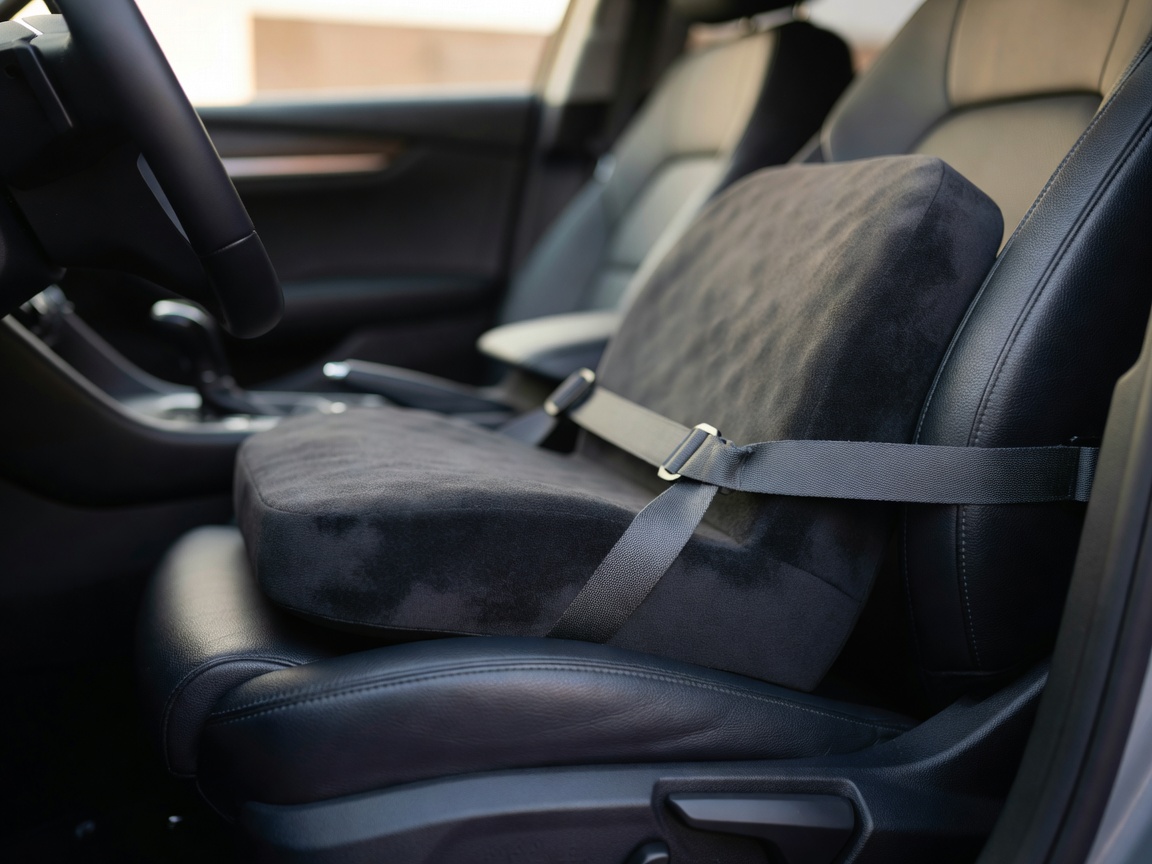
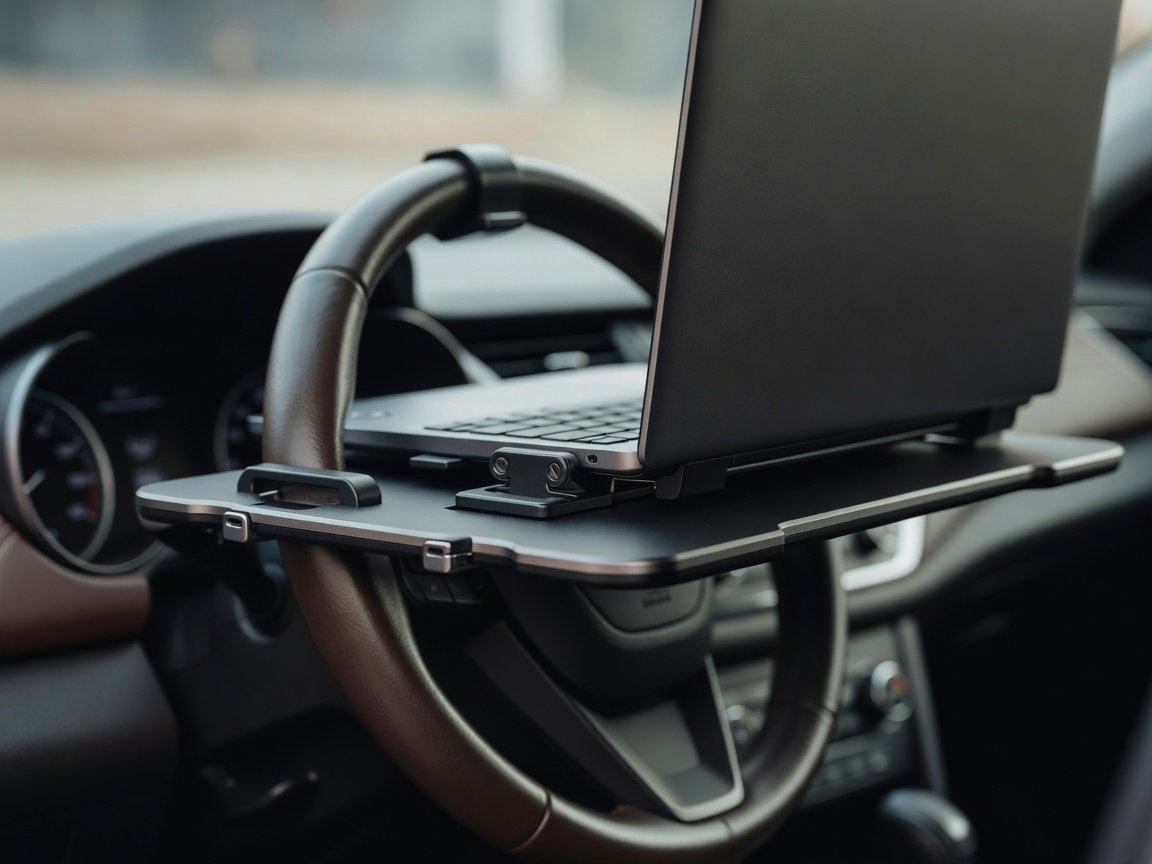
Three adjustments cover most of it. Put support at the small of your back so the natural curve is held. Keep your knees slightly below your hips; a wedge cushion helps. Raise the screen so your eyes meet the top third of it without tilting your head down.
Then breaks. The UK Health and Safety Executive advises short, frequent breaks from screen work rather than the occasional long one, with five to ten minutes an hour as a sensible rule of thumb. The 20-20-20 habit, recommended by eye-care bodies such as the American Academy of Ophthalmology, adds a glance at something 20 feet (about 6 metres) away for 20 seconds every 20 minutes.
// seat 02 · seat types
What works in your seat
Standard saloon and hatchback seats have a gentle lumbar curve at best. A memory-foam lumbar roll and a thin wedge are usually enough. Recline a few degrees past upright, which opens the hip angle and reduces pressure on your lower back.
Bucket seats hold you in place, which helps for driving and punishes you at a desk. Side bolsters squeeze the ribs when you lean forward to type. Skip bulky cushions that push you out of the bolsters; a slim lumbar pad is better.
Van captain seats are often the best office chairs on four wheels, with adjustable armrests and sometimes suspension. Raise the armrest to forearm height when typing, and add a lumbar cushion only if the built-in support is missing.
SUV seats sit higher, so your knees are naturally below your hips. That is a bonus. A rolled towel behind the lower back often does the job, and a footrest or bag under your feet stops your calves hanging.
// seat 03 · routine
Breaks, stretches and the boring bits
Get out of the car every hour. Walk round it, stretch your hip flexors and roll your shoulders. It takes four minutes and saves you a week of complaining about your back.
Temperature matters. A parked car can warm up quickly in sun, so crack a window, use a windscreen shade and drink water. Never leave children or animals in a parked car. And if you are anywhere enclosed, such as a garage, never run the engine: carbon monoxide is odourless and deadly.
Finally, set your screen height. A tray on the wheel puts the display low, so tilt it towards you and pull your seat back a notch. Your neck will thank you at about 4 pm.
// seat 04 · ranked
Comfort kit, ranked
- 01
Memory-foam lumbar roll BUY
Strap it on, adjust height until it fills the curve of your back. The biggest return for the least money.
- 02
Wedge seat cushion BUY
Tilts the pelvis forward and opens the hip angle. Pick a firm one; soft ones collapse after an hour.
- 03
Windscreen sunshade BUY
Keeps the cabin cooler and the screen readable. Foldable, cheap, quick.
- 04
Rolled towel footrest MAYBE
Free. Raises your feet slightly and takes pressure off the back of the thighs.
- 05
12 V heated seat pads for engine-off sessions SKIP
They eat battery. Fine while driving, a poor idea when parked. See the power page for the maths.